What Is Natural Language Processing and Why It Matters
Natural language processing (NLP) is a branch of artificial intelligence that enables computers to understand, interpret, and generate human language in a meaningful way. It matters because it powers essential technologies like chatbots, translation tools, and voice assistants, making human-computer interaction more intuitive and efficient.
Every time you type a question into a search bar, dictate a text message, or ask a voice assistant to set a timer, you are using natural language processing. NLP is the branch of artificial intelligence that gives computers the ability to read, interpret, and respond to human language. It is not about teaching machines to speak like a character in a science fiction movie; it is about making software useful for the way people actually communicate. This article explains what NLP is, how it works, what it can and cannot do, and why it has become one of the most important technologies of the digital age.
## What Is Natural Language Processing?
Natural language processing is the field of AI that focuses on helping computers understand, interpret, and generate human language. “Natural language” simply means the way people speak and write in everyday life — English, Spanish, Mandarin, and thousands of other languages. This is different from programming languages like Python or JavaScript, which are designed to be unambiguous and follow strict syntax rules.
Human language is messy. People use slang, incomplete sentences, sarcasm, and regional expressions. Words can have multiple meanings depending on context. A single phrase can be a question, a command, or a joke. NLP exists to bridge that gap: it takes unstructured text and speech — the kind found in emails, conversations, social media posts, and documents — and turns it into structured data a computer can process and act on.
## How Natural Language Processing Works
NLP is not a single technique. It is a collection of methods that work together to process language. Most NLP systems follow a similar pipeline, from raw input to useful output.
The first step is preprocessing. Raw text or audio is broken into smaller pieces. A sentence is split into words or subwords in a process called tokenization. Punctuation is normalized, capitalization is standardized, and common filler words may be filtered out. This stage gives the computer a clean, structured starting point.
The second step is analysis. The system examines the structure of the text — the grammar, the relationships between words, and the overall meaning. Early NLP systems relied on hand-written rules. Linguists and programmers would define grammar rules and dictionaries, and the software would match text against those rules. This approach worked for narrow, well-defined tasks but collapsed under the complexity of real-world language.
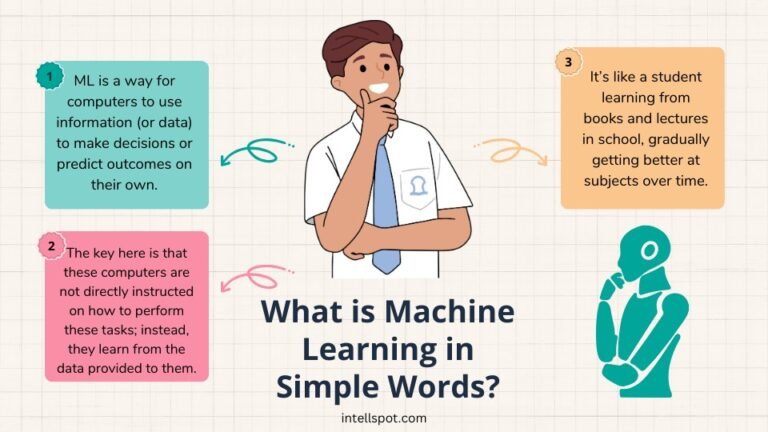
The modern era of NLP is driven by machine learning. Instead of being programmed with explicit rules, systems are trained on massive datasets of human language. They learn patterns, associations, and statistical relationships between words. This is where NLP overlaps with the broader field of machine learning, which powers many of the predictions and classifications these systems make. If you are new to that concept, our guide to machine learning in simple terms is a helpful starting point.
The biggest leap came with deep learning. Deep learning models, especially transformer-based architectures, can process entire sentences at once rather than word by word. They use a mechanism called attention to weigh which words matter most in context. This allows them to handle ambiguity, long-range dependencies, and nuanced meaning far better than earlier approaches. Our explanation of deep learning in simple words covers how these multi-layered neural networks learn from data.
The transformer architecture, introduced in the 2017 research paper “Attention Is All You Need,” is the foundation for most modern NLP systems, including the models behind today’s chatbots and translation tools.
The third step is output. Depending on the task, the system might produce a translated sentence, a summary, a classification label, or a generated response. The output is then delivered to the user or fed into another system.
## Core Tasks NLP Performs
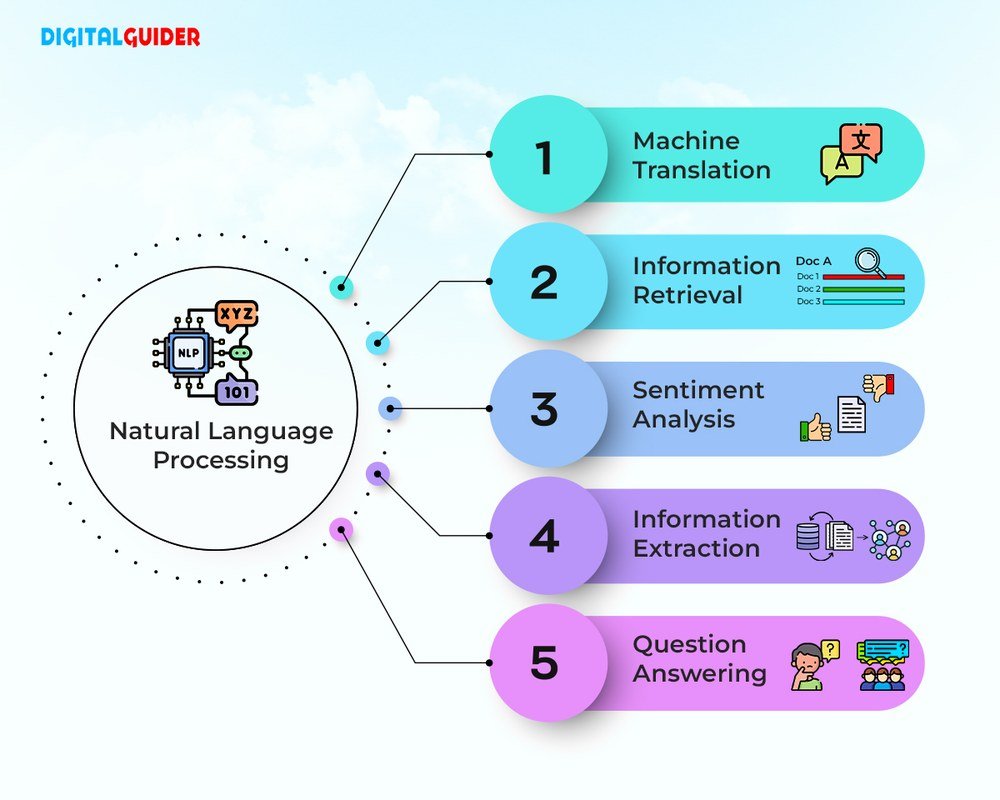
NLP is used for many specific tasks. Here are the most common ones:
| Task | What It Does | Everyday Example |
|---|---|---|
| Sentiment analysis | Detects the emotional tone of text | Brands tracking whether customer reviews are positive or negative |
| Named entity recognition | Identifies names, places, dates, and organizations | Email apps highlighting flight times and booking numbers |
| Machine translation | Converts text from one language to another | Translating a foreign website or menu |
| Text summarization | Condenses long documents into short summaries | News apps generating brief digests of long articles |
| Question answering | Finds or generates a direct answer to a question | Search engines and virtual assistants responding to queries |
| Text generation | Produces new human-like text from a prompt | Drafting emails, writing code, or brainstorming ideas |
These tasks are not separate worlds. A single product, like a virtual assistant, combines several of them at once: it converts speech to text, recognizes what you are asking, and generates a spoken reply. The same underlying models can be fine-tuned for different tasks, which is why NLP systems have become so flexible.
## Where NLP Shows Up in Everyday Life
NLP is already woven into the software you use daily, often without you noticing.
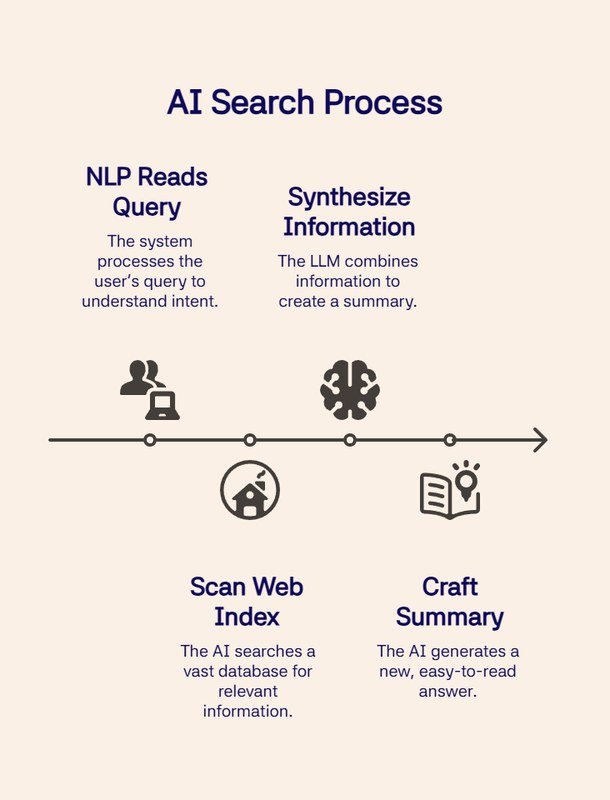
Search engines are one of the earliest and most successful applications. When you type a query, NLP helps the engine understand what you mean, not just which keywords match. Spelling correction, synonym handling, and featured snippets all rely on NLP. Even the autocomplete suggestions in the search box are generated by language models.
Email spam filters have used NLP for decades. They analyze the language of incoming messages to decide whether something looks like a phishing attempt or a legitimate conversation. This is a form of text classification, one of the oldest NLP tasks. Modern filters also scan for suspicious patterns in the body of the message, not just the subject line.
Voice assistants like Siri, Google Assistant, and Alexa depend on NLP at every step. They must recognize your speech, turn it into text, understand the intent behind the words, and generate a natural-sounding reply. The same technology powers dictation on phones and laptops, and it has improved to the point where most people can type by speaking faster than they can by tapping keys.
Machine translation has improved dramatically in the past decade. Modern systems translate entire sentences in context rather than word by word, which is why the results sound far more natural than the clunky translations of the past. Travelers, international businesses, and even casual social media users rely on it daily to communicate across language barriers.
Customer support chatbots are another major use. Many companies now deploy NLP-powered assistants that can answer common questions, route requests to the right department, and escalate complex issues to human agents. These systems are a form of AI agent — software designed to take actions based on understanding user input. Our guide to AI agents in simple words explains how these systems decide what to do next.
NLP quality varies widely by language and by task. A model that performs well on English news articles may struggle with casual social media slang, regional dialects, or languages with limited training data. Check the language coverage of any NLP tool before relying on it.
## NLP in Healthcare, Education, and Business
Beyond consumer apps, NLP is changing how professionals work with information.
In healthcare, NLP systems help read clinical notes, extract key details from medical records, and flag patterns that a doctor might miss. They do not replace clinical judgment, but they can reduce the time spent on documentation and help researchers search through decades of medical literature. The broader use of AI in medicine is growing quickly, and NLP is one of the core technologies behind it.
In education, NLP powers grammar checkers, writing feedback tools, and automated scoring for certain assignments. It can also help language learners by providing instant corrections and explanations. Teachers use NLP tools to analyze student writing for patterns of misunderstanding, and students use them to improve their drafts before submission.
In business, NLP is used to analyze customer feedback at scale, monitor brand mentions on social media, review contracts for risky language, and automate routine email responses. Legal teams and financial analysts use NLP tools to search through thousands of documents in minutes instead of weeks. Human resources departments use it to screen resumes and match candidates to job descriptions.
## The Limits of Natural Language Processing
For all its progress, NLP has real limitations that are worth understanding before you rely on it.
Ambiguity remains a challenge. The sentence “I saw her duck” can mean you watched a woman lower her head, or you saw a bird that belongs to her. Humans resolve this with context and world knowledge. Computers still struggle, especially when the context is thin or the sentence is deliberately misleading.
Sarcasm and irony are notoriously difficult. A review that says “Great, another update I have to install” is clearly not positive, but the words themselves are positive. Sentiment analysis systems frequently misread this kind of language, which is why brands still need human reviewers for nuanced feedback.
Bias is a serious concern. NLP models learn from human-written text, and that text contains human biases. Models can absorb stereotypes about gender, race, and culture, and then reproduce them in their outputs. Companies building NLP systems must actively test for and mitigate this, but it is an ongoing problem with no complete solution.
Privacy is another issue. Processing language often means processing personal information. Voice recordings, emails, and chat logs are sensitive data, and the systems that analyze them must be designed with strong safeguards. Users should be aware of what data is being collected and how it is used.
NLP models can produce confident-sounding but incorrect answers, sometimes called hallucinations. Always verify important information generated by AI tools before relying on it, especially for medical, legal, or financial decisions.
## Why Natural Language Processing Matters
NLP matters because language is the most natural interface between humans and machines. For decades, using a computer meant learning its rules. You had to know which commands to type, which menus to open, and which buttons to click. NLP reverses that relationship: the computer learns your rules instead.
This has practical consequences for accessibility. Voice interfaces help drivers, people with visual impairments, and anyone whose hands are busy. Speech-to-text tools help people who cannot type. Translation tools break down language barriers in travel, trade, and diplomacy. NLP makes technology usable by more people, in more situations, than ever before.
NLP also unlocks value in data. The vast majority of the world’s data is unstructured text: emails, reports, reviews, research papers, and chat logs. NLP is the technology that makes that data searchable, analyzable, and actionable. A company that can automatically understand thousands of customer complaints has an advantage over one that reads them one by one. A researcher who can search millions of papers in seconds can move faster than one who reads them manually.
NLP is also the foundation for more advanced AI systems. Modern generative AI tools, which can write essays, summarize documents, and hold conversations, are built on NLP models. Understanding NLP is the first step toward understanding how these tools work and where they are headed. Our explanation of generative AI and how it works is a good next stop if you want to go deeper.
- When evaluating an NLP-powered tool, test it with the kind of language you actually use, not just polished examples from the marketing page.
- Check which languages and dialects a tool supports before relying on it for translation or customer support.
- For important decisions, treat AI-generated summaries as a starting point and verify the source material yourself.
- Be aware that NLP models reflect the data they were trained on, so review outputs for bias or stereotyping.
## The Bottom Line
Natural language processing is the technology that lets computers understand and generate human language. It powers search engines, voice assistants, translation tools, spam filters, and the chatbots that have become a routine part of online life. It works by combining linguistics with machine learning and deep learning, and modern systems are built on transformer models that can process language in context.
NLP is not perfect. It struggles with ambiguity, sarcasm, bias, and privacy concerns. But it has already changed how people interact with technology, and it will only become more central as voice interfaces and AI assistants continue to improve.
- NLP is the branch of AI that helps computers read, interpret, and respond to human language.
- Modern NLP relies on machine learning and deep learning, not hand-written rules.
- It powers search, translation, voice assistants, spam filters, and customer support chatbots.
- NLP has real limits, including ambiguity, bias, and the risk of confident but incorrect answers.
- Understanding NLP is the foundation for understanding generative AI and the future of human-computer interaction.
- Core Definition: Natural language processing is a branch of AI that lets computers understand, interpret, and.
- How It Works: It combines computational linguistics with machine learning to break down text and speech into.
- Everyday Use: NLP powers familiar tools like chatbots, voice assistants, spam filters, and real-time translation services.
- Business Value: Organizations use NLP for sentiment analysis, customer support automation, and extracting insights from unstructured.
- Key Challenges: Sarcasm, ambiguity, and cultural context remain difficult for NLP systems to master accurately.
Frequently Asked Questions



2 Comments