What is Machine Learning in Simple Terms for Beginners
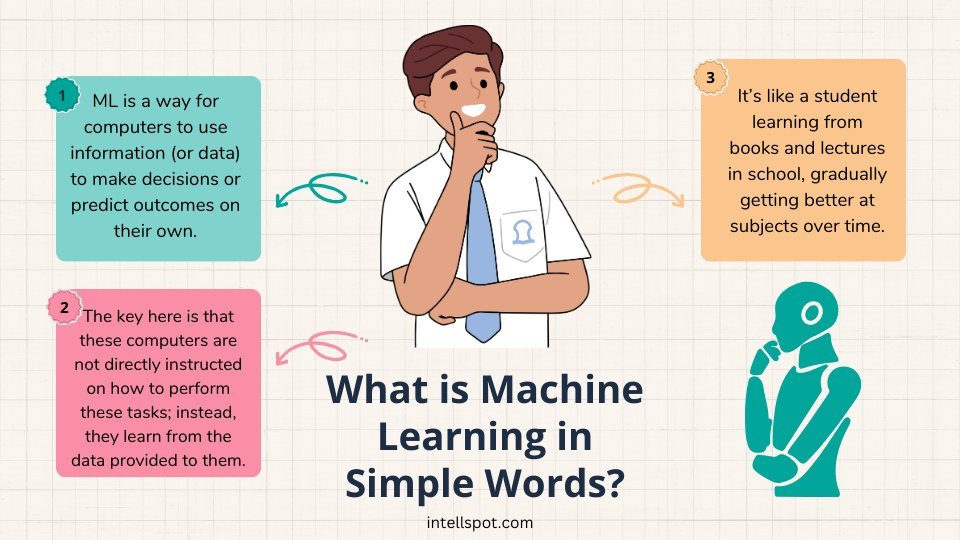
Machine learning is a branch of artificial intelligence where computers learn patterns from data instead of following explicit rules. It powers everyday tools like spam filters, recommendations, and voice assistants.
If you have ever wondered what is machine learning in simple terms, you are not alone. Machine learning powers everything from spam filters to streaming recommendations, yet most explanations get buried in jargon. This guide explains ML in plain English, walks through how it works, and shows why it matters for your career and everyday decisions.
- Definition: ML is learning from data, not from explicit programming rules.
- Data matters: The quality of your data affects results more than the algorithm you choose.
- Accessible: Beginners can start with free courses, Python, and one small project.
- Limits: ML finds patterns but cannot reason, explain, or guarantee certainty.
- Worth learning: ML literacy helps careers, business decisions, and daily tech use.
What Is Machine Learning in Simple Terms?
Machine learning is a branch of artificial intelligence in which computers learn from data instead of following step-by-step instructions written by a human. In traditional software, a programmer writes explicit rules for every scenario. In machine learning, the system studies examples, finds patterns, and uses those patterns to make predictions or decisions on new data.
In other words, the machine “learns” by adjusting its internal logic based on the examples it sees. The more relevant data it receives, the better its predictions become.
A Simple Analogy to Understand Machine Learning
Think about how a child learns to recognize a cat. You do not explain feline anatomy or fur texture. Instead, you point at pictures and say “cat.” After enough examples, the child recognizes cats in photos they have never seen before.
Machine learning works the same way. You feed a program thousands of labeled images of cats and dogs. The program identifies patterns — shapes, colors, edges — that separate the two groups. Once trained, it can classify a brand-new photo it has never encountered. The analogy is not perfect, but it captures the core idea: learning from examples rather than from explicit rules.
Machine Learning vs. Traditional Programming: Key Differences
The clearest way to understand ML is to contrast it with traditional programming. In classic software, the human supplies the rules and the computer applies them to data. In machine learning, the human supplies data and the computer discovers the rules.
| Aspect | Traditional Programming | Machine Learning |
|---|---|---|
| Input | Rules + data | Data + answers (labels) |
| Output | Answers | Rules (the model) |
| Human effort | Writing every rule | Preparing data and tuning the model |
| New situations | Requires new rules | Can generalize from patterns |
| Best for | Stable, well-defined tasks | Complex tasks with large datasets |
Neither approach is universally better. A calculator should use traditional programming; a system that detects fraud across millions of transactions is a better fit for machine learning.
Key Concepts: What to Look For When Learning Machine Learning
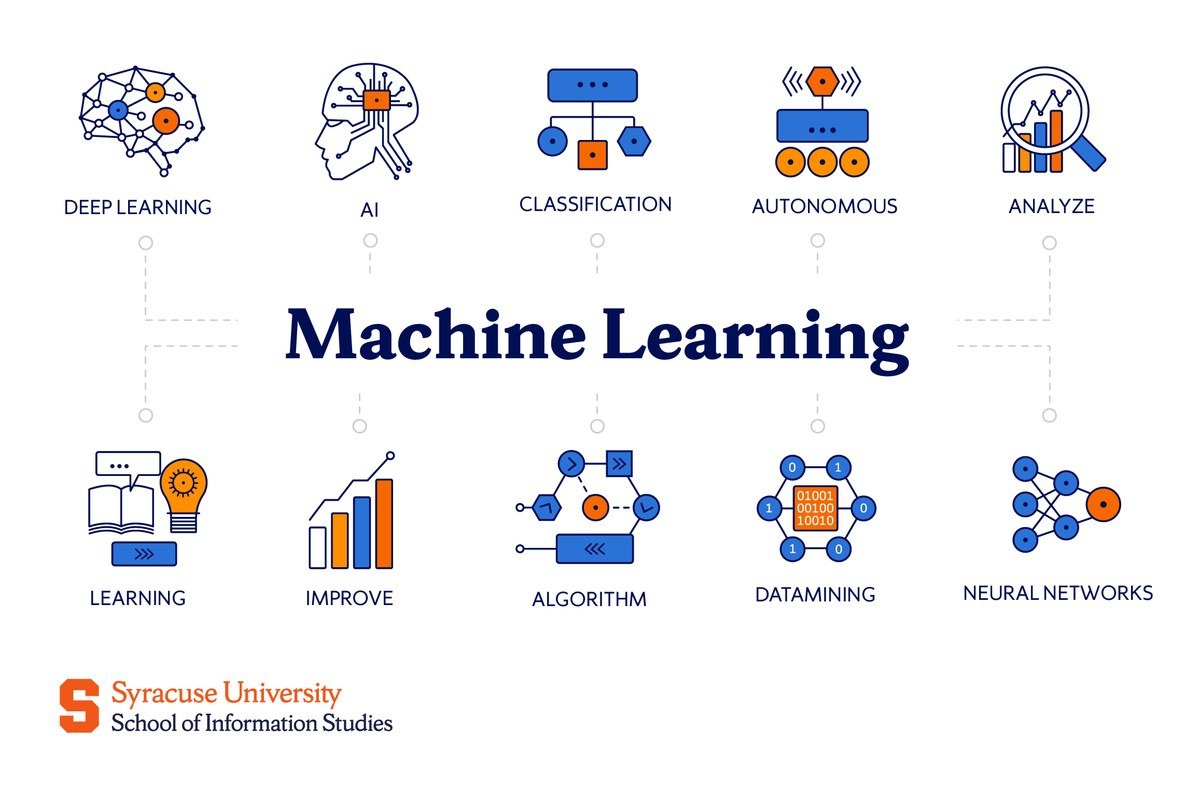
Diagram showing key machine learning concepts from data input to model predictions.
Before diving into tools and courses, it helps to understand a few core ideas. These concepts appear in every ML project, regardless of the industry or algorithm.
Data: The Fuel Behind Every Machine Learning Model
Data is the raw material of machine learning. Every model learns from examples, and the quality of those examples determines the quality of the results. If the data is incomplete, outdated, or biased, the model will reflect those flaws.
For beginners, this means the most important skill is not coding — it is understanding data. Where does it come from? Is it accurate? Does it represent the people or situations the model will face in the real world? Answering these questions honestly separates useful models from misleading ones.
Data quality varies by source and project. A model trained on one region, time period, or user group may perform poorly elsewhere. Always check how the data was collected before trusting the model’s output.
Algorithms and Models: How Machines Actually Learn
An algorithm is the learning procedure — the set of mathematical steps the computer follows. A model is the result of that procedure: the learned patterns that can be applied to new data.
Think of the algorithm as the training routine and the model as the trained athlete. You do not need to understand the deep math behind every algorithm to start learning, but you should know the main families: supervised learning (learning from labeled examples), unsupervised learning (finding structure in unlabeled data), and reinforcement learning (learning through trial and error).
Training, Validation, and Testing: How Models Are Evaluated
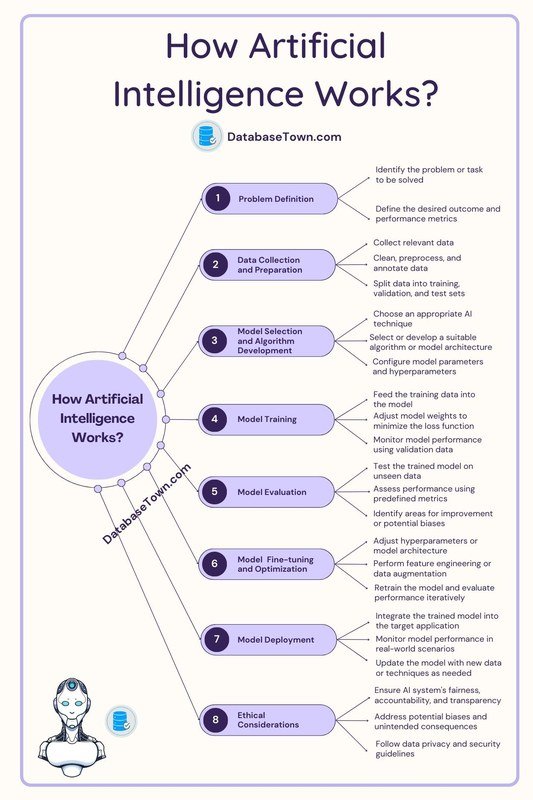
You cannot judge a model on the same data it learned from — it would simply memorize the answers. That is why ML projects split data into three sets:
- Training set: the examples the model learns from.
- Validation set: used during training to tune the model and prevent overfitting.
- Testing set: held back until the end to measure how well the model performs on data it has never seen.
This split is the backbone of honest evaluation. A model that scores perfectly on training data but poorly on test data is overfitted — it memorized rather than learned.
Who Should Learn Machine Learning and Why?
Machine learning is no longer reserved for researchers at tech giants. The skills are useful across fields, and the barrier to entry has never been lower.
Students, Career Changers, and Aspiring Data Scientists
If you are a student or considering a career change, ML offers a clear path into data science, AI engineering, and analytics. You do not need a PhD to start. Many practitioners begin with a free online course, a Python tutorial, and a small personal project.
Employers value practical proof over credentials. A portfolio of small, well-documented projects — a house-price predictor, a spam classifier, a movie recommender — often speaks louder than a certificate alone.
Business Professionals and Entrepreneurs
You do not need to build models to benefit from ML knowledge. Marketers, product managers, and founders who understand what ML can and cannot do make better decisions about which projects to fund and which vendors to trust.
Understanding the basics helps you ask the right questions: What data will this model use? How will we measure success? What could go wrong? Before relying on any vendor’s ML service, review the provider’s terms and conditions.
The Career and Decision-Making Benefits of ML Knowledge
Even if you never write a line of code, ML literacy is a differentiator. It helps you interpret the AI features appearing in everyday tools, evaluate claims made by software vendors, and spot the difference between genuine capability and marketing hype.
Real-World Applications: How Machine Learning Is Used Every Day
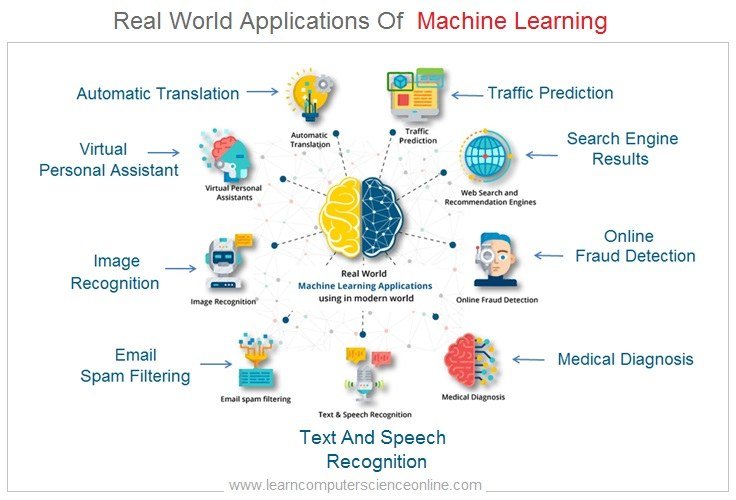
Everyday machine learning applications include voice assistants, product recommendations, and facial recognition.
Machine learning is not a futuristic concept. It is already embedded in the tools you use daily.
Everyday Applications You Already Rely On
Your email spam filter learns from the messages you mark as spam. Your streaming service recommends shows based on your viewing history. Your phone’s keyboard predicts the next word as you type. Your navigation app predicts traffic and suggests faster routes. Each of these is machine learning working quietly in the background.
Voice assistants, facial recognition on your phone, and the fraud alerts your bank sends — all of these rely on models trained on large datasets. You interact with machine learning dozens of times before lunch without noticing it.
Industry Use Cases: Healthcare, Finance, Retail, and More
In healthcare, ML models help analyze medical images, flag unusual lab results, and predict patient readmission risks. In finance, they detect fraudulent transactions and assess credit risk. In retail, they power demand forecasting, personalized recommendations, and dynamic pricing.
Manufacturing uses ML for predictive maintenance — spotting equipment failures before they happen. Agriculture uses it to monitor crop health from satellite images. The pattern is the same everywhere: ML excels when there is lots of data and a clear prediction to make.
Limitations and Common Misconceptions About Machine Learning
Machine learning is powerful, but it is not magic. Understanding its limits prevents disappointment and bad decisions.
What Machine Learning Cannot Do
Machine learning cannot reason like a human, understand context the way we do, or explain its decisions in most cases. It is essentially a pattern-matching engine. If the real world changes in ways the training data did not capture, the model’s performance drops.
ML also requires large amounts of relevant data. A model trained on historical data may reinforce past biases or fail in unprecedented situations. It can tell you what happened before and what is likely to happen next, but it cannot tell you what should happen.
Common Myths About Machine Learning Debunked
Myth: “Machine learning is the same as artificial intelligence.” AI is the broader field; ML is one approach within it.
Myth: “You need a PhD in math to learn ML.” The fundamentals are accessible with high-school-level math. Advanced research requires more, but applied ML does not.
Myth: “Machine learning will replace all jobs.” ML automates specific tasks, not entire roles. Most jobs will change rather than disappear.
Myth: “A model is either right or wrong.” Models produce probabilities, not certainties. A 95% accurate model still makes mistakes on 5% of cases.
Common Mistakes Beginners Make (and How to Avoid Them)
Most beginners stumble on the same few hurdles. Knowing them in advance saves weeks of frustration.
Skipping the Fundamentals and Jumping Straight to Tools
The biggest mistake is installing a dozen libraries and running tutorials without understanding what is happening underneath. You can copy code, but you cannot debug what you do not understand.
Start with the basics: how data is structured, how models are trained, and how to evaluate results. Then add tools. The tools change every few years; the fundamentals do not.
- Learn core concepts before advanced libraries.
- Build one small project from scratch.
- Document your process and results.
- Copy-pasting code without understanding it.
- Collecting certificates without building anything.
- Jumping to deep learning before mastering basics.
Overlooking Data Quality and Algorithmic Bias
Beginners often obsess over algorithms while ignoring the data. A fancier algorithm cannot fix bad data. Garbage in, garbage out still holds true.
Bias is a data problem too. If your training data underrepresents certain groups, your model will underperform for those groups. This is not a hypothetical issue — it has affected real systems in hiring, lending, and healthcare. Always ask who is missing from your data and what that means for your model.
How to Continue Your Learning Journey in 2026
The ML landscape evolves quickly, but the path for beginners remains stable. Focus on fundamentals first, then build outward.
A Practical Learning Path for Absolute Beginners
Python is the most common language for ML. You only need the essentials: variables, loops, functions, and data structures.
Learn to load, clean, and explore data with pandas and basic visualization tools.
Start with a simple supervised learning problem, such as predicting house prices from a small dataset.
Split your data, measure performance, and improve your model based on the results.
Pick one small project and finish it. A complete, imperfect project teaches you more than ten half-finished tutorials. Before signing up for any course or platform, review its terms and conditions so you know what you are committing to.
Staying Updated: Tools, Communities, and Emerging Trends
The ML community is one of the most open in tech. Free courses, public datasets, and open-source libraries mean you can learn without spending money. Join online communities, follow practitioners on social platforms, and read documentation from official sources.
In 2026, the biggest shifts are around generative AI, smaller and more efficient models, and the growing emphasis on responsible AI. You do not need to chase every trend, but staying aware helps you choose what to learn next. When using public datasets or deploying models commercially, always check the terms and conditions attached to the data and tools.
Final Recommendation: Is Machine Learning Worth Learning?
Yes — but start small. Machine learning is one of the most useful skills of the decade, whether you want a technical career, a business edge, or simply a better understanding of the technology shaping your world.
The Bottom Line: Start Small, Think Big
You do not need to master calculus or build a neural network this week. Start with the fundamentals, work with real data, and finish one small project. That single project will teach you more than a year of passive reading.
- Machine learning is learning from data, not from explicit rules.
- Data quality matters more than algorithm choice.
- Anyone can start with free resources and a small project.
- Understand ML’s limits to use it responsibly.
Frequently Asked Questions



3 Comments