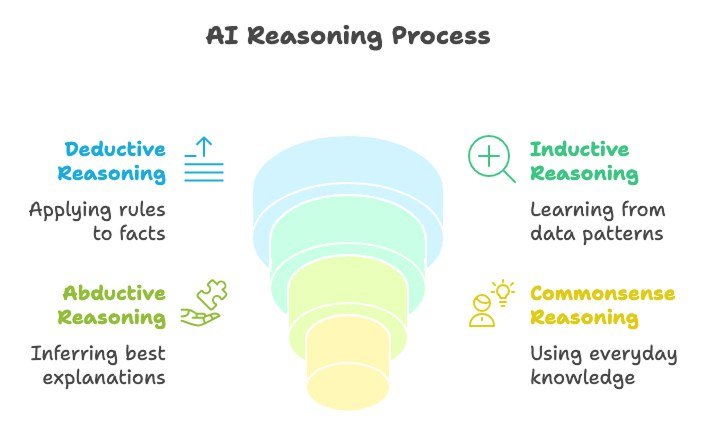
What is AI Reasoning in Simple Words A Beginners Guide
AI reasoning is when an AI system works through a problem step by step before answering, weighing options and checking its own logic. Instead of just predicting the most likely response, it explains how it got there.
Understanding what is ai reasoning in simple words comes down to one key shift: instead of instantly blurting out an answer, the AI pauses, maps out the problem, and checks its own logic before replying. It is the difference between a quick guess and a worked solution.
In this guide, the TheWordsNews Editorial Team explains how reasoning works in plain English, how it differs from standard AI, what to look for in reasoning tools, and who gets the most value from them.
- Definition: AI reasoning means breaking a problem into steps, exploring solutions, and self-checking before answering.
- Key difference: Standard AI predicts quickly; reasoning AI plans, evaluates, and explains its path.
- Trade-offs: Reasoning is slower and costlier but more accurate on math, logic, and planning tasks.
- What to check: Look for tools that show their reasoning trail and state their assumptions clearly.
- Best practice: Use reasoning mode for complex problems and verify important outputs against reliable sources.
What Is AI Reasoning in Simple Words?
AI reasoning is the ability of an AI system to think through a problem step by step before producing an answer. When you ask a standard chatbot a question, it predicts the most likely response based on patterns in its training data. A reasoning model goes further: it breaks your question into smaller pieces, considers several possible answers, compares them, and then explains the path it took.
A useful analogy is solving a word problem in math class. A student who guesses “42” because it looks familiar is behaving like a standard AI. A student who writes out the formula, shows each calculation, and double-checks the result is reasoning. Both may arrive at an answer, but the second approach is easier to trust and easier to correct when something goes wrong.
Reasoning models are built on the same foundations as other AI systems, including machine learning and deep learning. If you want a refresher on the broader field, our guide to what is artificial intelligence in simple words explains the basics.
How AI Reasoning Works Without the Jargon

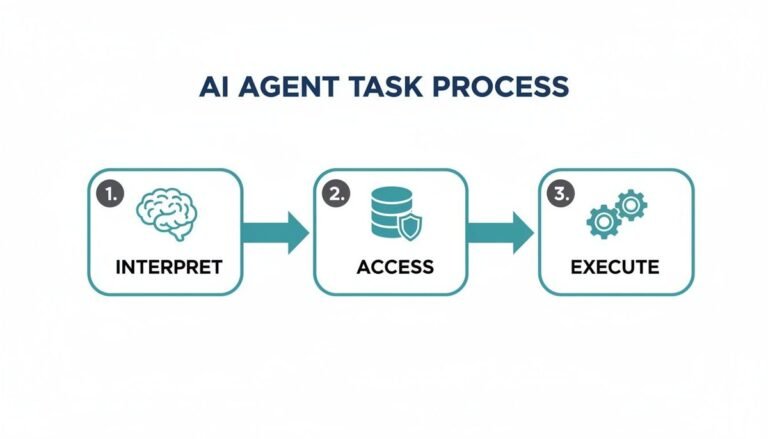
A basic flowchart illustrating how AI processes data to reach conclusions.
You do not need a computer science degree to understand the process. Most reasoning models follow three rough steps, and they repeat this loop until they settle on a final answer.
Step 1: Breaking Down the Problem
The model first splits a complex question into smaller, manageable parts. If you ask, “Should I bring an umbrella tomorrow?” the model might break that into: What is the forecast? What do you have planned? How much does getting wet matter? This decomposition makes the task easier to handle and reduces the chance of missing something important.
Step 2: Exploring Possible Solutions
Next, the model generates multiple candidate answers and evaluates them. It might think through a sunny forecast, a rainy forecast, and an uncertain forecast, then weigh the consequences of each. This is similar to a chess player considering several moves before committing. The model scores each path and discards the weaker options.
Step 3: Self-Checking the Answer
Finally, the model reviews its own answer for mistakes. It looks for gaps in logic, contradictions, or places where it ignored part of the question. If it finds a problem, it revises and runs through the steps again. This self-checking loop is what separates reasoning from simple prediction.
AI Reasoning vs. Standard AI: What’s the Difference?
The quickest way to understand the difference is to compare the two side by side.
| Feature | Standard AI | AI Reasoning |
|---|---|---|
| How it answers | Predicts the most likely response | Plans, evaluates, and self-checks |
| Speed | Fast | Slower because it thinks in steps |
| Transparency | Often gives no explanation | Usually shows its steps |
| Best for | Quick tasks, drafting, simple Q&A | Math, logic, planning, debugging |
| Cost | Lower | Higher due to extra computing |
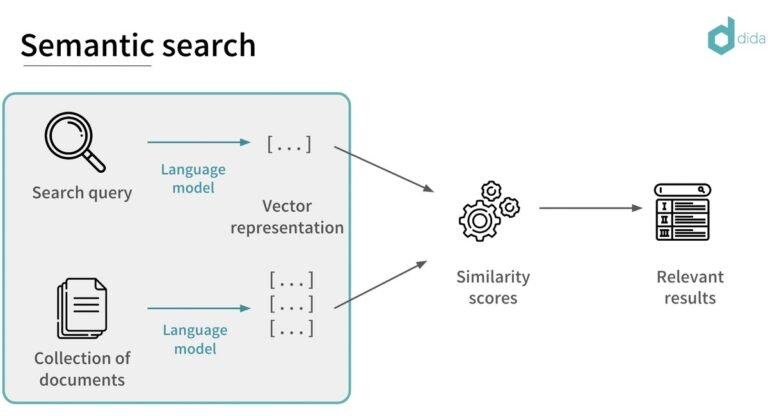
The line between the two is not always sharp. Many modern tools blend both approaches: they use fast prediction for simple questions and switch into reasoning mode for harder ones. In practice, “reasoning” is more of a feature than a separate category of AI. For more background on how these systems learn patterns in the first place, our guide to what is machine learning in simple terms is a good next step.
What to Look For in AI Reasoning Tools<
A checklist of criteria for choosing AI reasoning tools.
A checklist of criteria for choosing AI reasoning tools.
If you are choosing between AI tools that advertise reasoning abilities, a few factors matter more than the marketing claims.
Transparency and Explainability
The most important feature is transparency. A good reasoning tool shows its work: it lists the steps it took, points to the evidence it used, and lets you see where it got stuck. If a tool gives a confident answer with no explanation, you cannot tell whether it actually reasoned or just guessed. Look for options that let you expand the reasoning trail or show a summary of the model’s thought process.
Accuracy, Speed, and Cost
Reasoning takes more computing power, which means it is slower and more expensive than standard AI. Some providers charge higher rates for reasoning models, and longer responses use more tokens. A tool that is accurate but painfully slow may not be worth it for everyday tasks. The right balance depends on what you are doing: quick drafts do not need deep reasoning, while complex analysis usually does.
Use reasoning mode only when the task actually requires multi-step logic. For simple questions, a standard AI response is faster, cheaper, and often just as accurate.
Who Benefits Most From AI Reasoning?
Reasoning AI is not just for programmers. Several groups get real value from it:
- Students and researchers use it to check math solutions, summarize papers, and spot weaknesses in arguments.
- Data analysts and financial professionals use it to walk through complex calculations and explain findings clearly.
- Software developers use it to debug code, plan architecture, and review edge cases.
- Writers and marketers use it to structure long pieces, test logical flow, and catch contradictions.
- Managers and decision-makers use it to weigh options, list risks, and prepare for difficult conversations.
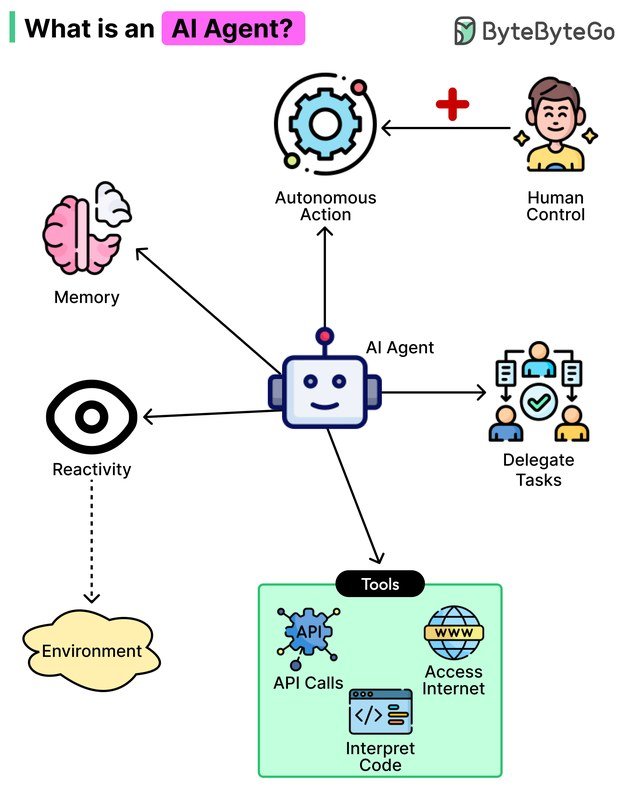
In many of these scenarios, reasoning AI works best as a thinking partner rather than an authority. It can also be combined with other AI tools, such as AI agents that take actions on your behalf. Our guide to what is an AI agent in simple words explains how agents differ from chatbots and reasoning models.
Key Benefits of AI Reasoning
The benefits go beyond getting the right answer. Reasoning models change how you can work with AI.
- Better accuracy on multi-step problems like math, logic, and planning
- Explanations you can review, correct, and learn from
- Fewer obvious mistakes because the model checks its own work
- Useful for brainstorming, debugging, and decision support
- Slower responses than standard AI
- Higher computing cost and token usage
- Still capable of confident false answers
- Not needed for simple or creative quick tasks
The biggest practical benefit is accountability. When a model shows its steps, you can find the exact point where it went wrong. That makes the tool useful for learning and for catching errors, not just for getting an answer.
Limitations, Common Mistakes, and Best Practices
Reasoning AI is powerful, but it is not magic. Knowing its limits helps you avoid the most common pitfalls.
Common Limitations to Keep in Mind
Reasoning models still hallucinate. The extra steps reduce mistakes but do not eliminate them. They also depend heavily on the quality of their training data, so they can struggle with very recent events or highly specialized knowledge. And because they are trained on text, they do not truly understand the world; they are extremely good at mimicking logical structure, not at experiencing reality.
Mistakes Beginners Often Make
The most common mistake is treating reasoning output as verified fact. A model that shows its work can still be wrong in subtle ways. Another mistake is using reasoning mode for everything, which wastes time and money on simple tasks. A third mistake is sharing sensitive information in a prompt without checking the tool’s privacy policy, since some providers use conversations for training.
- Ask the model to show its steps and explain its assumptions
- Verify important facts against reliable sources
- Use reasoning mode for complex, multi-step problems
- Trusting a confident answer just because it has a long explanation
- Using reasoning tools for simple questions where speed matters
- Pasting confidential data into a tool without checking its privacy policy
Best Practices for Reliable Results
To get the most out of reasoning AI, start with a clear and specific question. Vague prompts produce vague reasoning. Ask the model to state its assumptions and to flag any uncertainty. For high-stakes decisions, treat the model’s output as a draft to be reviewed, not a final verdict. And when a tool offers a reasoning trail, read it; that is where you will catch errors before they become problems.
The Value of AI Reasoning and Our Final Recommendation
AI reasoning is one of the most useful shifts in how everyday people interact with AI. It turns a black box into a transparent thinking partner that can explain itself, catch its own mistakes, and help you make better decisions. It is not a replacement for human judgment, but it is a strong assistant for anything that requires careful, step-by-step thinking.
- AI reasoning means the model breaks problems into steps, explores options, and self-checks before answering.
- It differs from standard AI in speed, transparency, and cost, not in being a completely new kind of technology.
- Look for tools that show their reasoning trail and clearly explain their assumptions.
- Use reasoning mode for complex tasks, keep standard AI for quick ones, and always verify important outputs.
Our final recommendation is simple: use AI reasoning where it adds value, and skip it where it does not. For math, logic, planning, debugging, and any question that rewards a visible thought process, a reasoning model is worth the extra time and cost. For casual questions and quick drafts, a standard AI response is usually the better choice.
Frequently Asked Questions