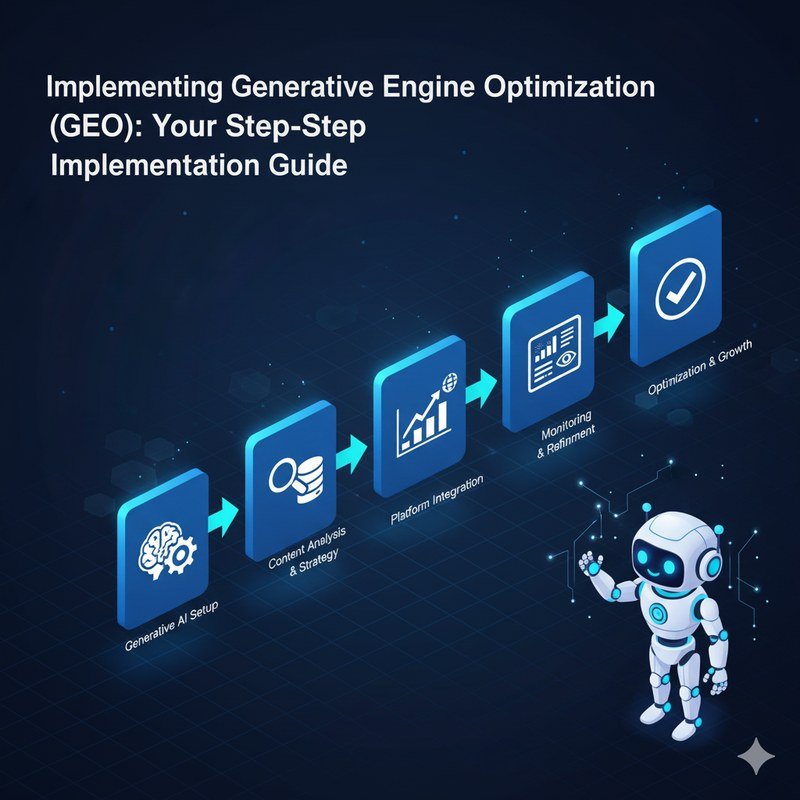
What Is Generative Engine Optimization Explained Simply
Generative engine optimization (GEO) is the practice of making your content more likely to be retrieved and cited by AI-powered search engines and chatbots. It focuses on direct answers, structured data, and clear entities rather than traditional keyword rankings.
If you have ever wondered what is generative engine optimization, the short answer is that it is the practice of making your content more likely to be cited by AI-powered search tools when they generate answers. Instead of competing for the first blue link, you are competing to be the source an AI engine trusts enough to quote.
Generative engines such as ChatGPT, Perplexity, Google AI Overviews, and Microsoft Copilot are changing how people find information. More and more users skip the traditional results page and ask an AI assistant directly. That shift raises a pressing question for brands, publishers, and marketers: how do you stay visible when there is no search result page to rank on? Generative engine optimization, or GEO, is the emerging answer.
- GEO defined: Optimizing content so AI answer engines cite it in generated responses.
- Key tactics: Answer-first writing, schema markup, and consistent entity information.
- Best fit: Brands whose audiences use AI assistants for research and buying decisions.
- Main limitation: Attribution is inconsistent and measurement tools are still maturing.
- Bottom line: GEO complements SEO; it does not replace it.
What Is Generative Engine Optimization?
Generative engine optimization is the discipline of structuring, writing, and positioning content so that AI-powered answer engines retrieve it, understand it, and cite it in their responses. Where traditional SEO focuses on ranking pages in a list of links, GEO focuses on becoming a named source inside an AI-generated answer.
When a user asks an AI assistant a question, the system does not invent an answer from memory alone. It pulls relevant passages from indexed web content, weighs which sources seem credible, and then composes a response. If your content is clear, authoritative, and easy to parse, you have a much better chance of being included — and credited.
GEO is still an evolving field. Different AI platforms use different retrieval and ranking methods, so a tactic that works well in one tool may have less impact in another. Treat the strategies in this article as a strong foundation rather than a fixed formula.
GEO vs. SEO: What’s the Difference?
SEO and GEO share the same ultimate goal — visibility — but they operate in different environments. SEO optimizes for a search engine’s ranking algorithm, which returns a page of links. GEO optimizes for a large language model’s retrieval-and-synthesis process, which returns a written answer with citations.
| Comparison | Traditional SEO | Generative Engine Optimization |
|---|---|---|
| Primary goal | Rank high in search results | Get cited in AI-generated answers |
| Audience | Users scanning a results page | AI systems synthesizing an answer |
| Success metric | Clicks, impressions, rankings | AI mentions, citations, referral traffic |
| Content style | Keyword-optimized pages | Direct answers, structured data, entity clarity |
| Optimization loop | Search algorithm updates | Model updates and retrieval changes |
The practical difference matters. A page that ranks well in traditional search can still be ignored by an AI engine if its content is buried under fluff, lacks clear structure, or never directly answers the question. Conversely, a page that earns an AI citation may not rank in the top ten of a traditional search. The strategies overlap, but they are not the same.
How Generative Engines Choose What to Cite
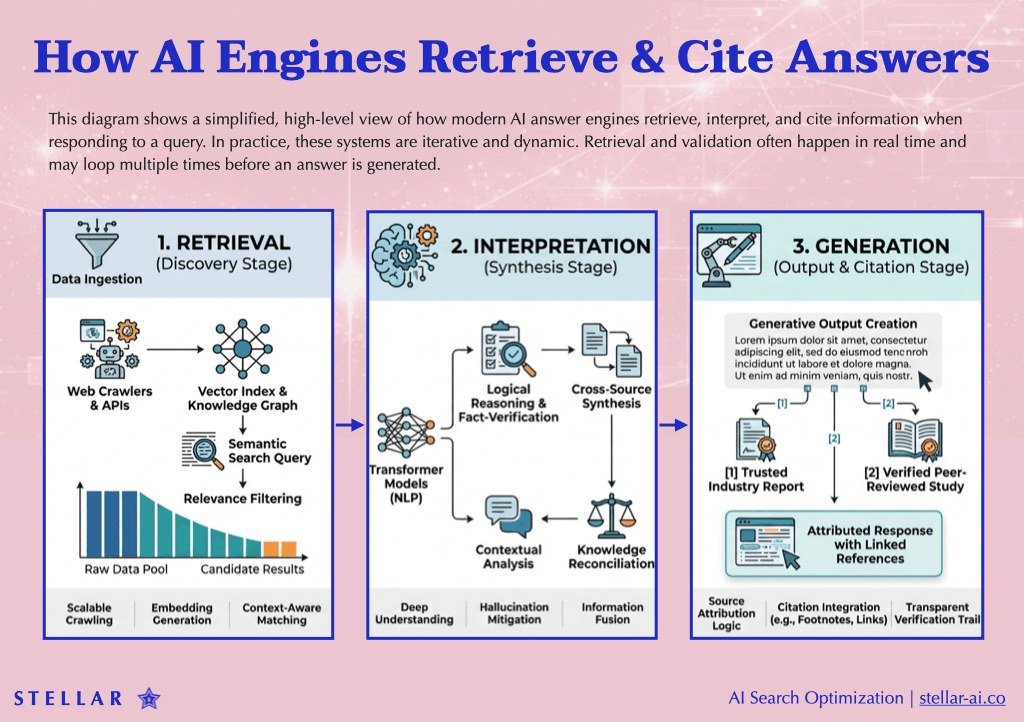
Visual shows how AI chooses which sources to cite.
To optimize for AI answers, it helps to understand how these systems decide what to include. Most modern AI search tools rely on a process called retrieval-augmented generation, or RAG.
The Role of Retrieval-Augmented Generation in AI Answers
RAG combines two components: a retrieval system that searches indexed content for relevant passages, and a generative model that turns those passages into a natural-language answer. When a user asks a question, the retrieval system identifies documents that appear relevant, the model reads them, and then it composes a response — often citing the sources it used.
This matters for content creators because the retrieval step behaves a lot like a search engine. It looks for pages that are crawlable, well-structured, and clearly relevant to the query. But the generation step adds another layer: the model favors passages that are self-contained, factual, and easy to quote. A paragraph that states the answer clearly in two sentences is far more likely to be pulled into an AI response than a long introduction that eventually gets to the point.
Write each section so it can stand alone. AI systems often pull a single passage rather than an entire page, so every key paragraph should make sense even if a reader sees only that paragraph.
Core Elements of a GEO Strategy
Building a GEO strategy means changing how you plan, write, and structure content. Three elements matter most: answer-first formatting, structured data, and entity clarity.
Answer-First Content: Structuring for Direct Responses
Answer-first content puts the direct response at the top of the page, followed by supporting detail. This structure helps AI retrieval systems quickly identify the passage that answers the query. It also helps human readers, who increasingly want fast answers rather than long introductions.
Use question-based headings that mirror how people actually ask. If a user types “how long does a passport take to renew,” a heading like “How Long Does a Passport Renewal Take?” signals relevance to both the retrieval system and the generative model. Keep the answer within the first paragraph under that heading, and avoid burying the key fact in a later section.
Structured Data and Schema Markup
Schema markup is code added to a page that helps machines understand its content. For GEO, the most useful types include FAQPage, HowTo, Article, and Organization. This markup gives AI systems explicit signals about what a page covers, who published it, and what questions it answers.
Implementing schema does not guarantee a citation, but it reduces the work the AI system must do to interpret your page. It also supports traditional SEO, which makes it a low-risk addition to any content strategy.
Entity Clarity and Authoritative Citations
An entity is a distinct thing — a person, brand, organization, or concept — that can be recognized and linked across the web. AI engines rely on entities to verify who you are and whether you are trustworthy. If your brand name, description, and contact information are consistent across your website, social profiles, and directories, you make it easier for AI systems to build a reliable picture of your business.
Authoritative citations matter too. When other reputable sites mention your brand or link to your content, you gain credibility in the eyes of both traditional search engines and AI retrieval systems. Earning those citations requires the same fundamental work as earning backlinks: producing genuinely useful content that other people want to reference.
Who Should Invest in GEO (and Who Can Wait)
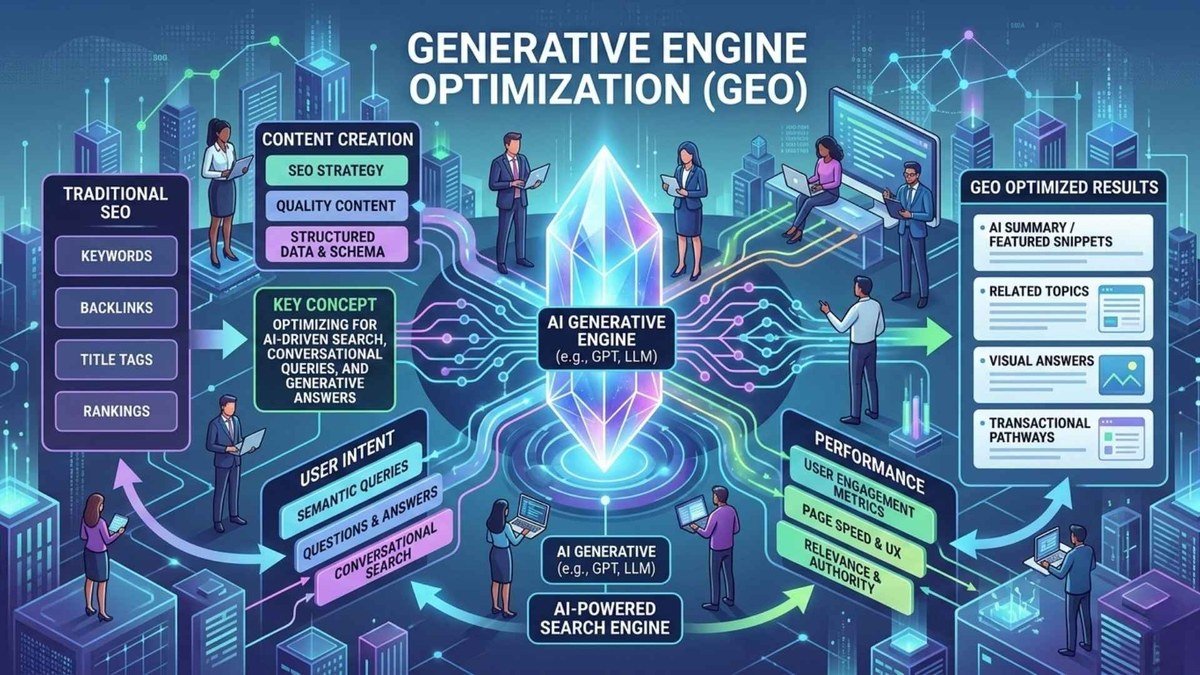
Chart comparing business types by priority for GEO investment, from immediate adopters to wait-and-see.
GEO is not equally urgent for every business. Understanding where it fits in your priorities will help you decide how much time and budget to commit.
Best Fits for Generative Engine Optimization
GEO delivers the most value for organizations whose audiences already rely on AI assistants for research and decision-making. That includes software and SaaS companies, B2B firms, publishers, and e-commerce brands with strong informational content. If your customers ask AI tools for product recommendations, comparisons, or how-to guidance, being cited in those answers can drive meaningful brand awareness and referral traffic.
When GEO Isn’t the Priority
For some businesses, traditional SEO and other marketing channels still deserve more attention. Very small local businesses with limited budgets may see better returns from local search optimization, reviews, and direct outreach. Brands in highly visual categories — such as fashion, interior design, or art — may find that image search and social platforms matter more than AI citations. And if your customers simply do not use AI tools yet, GEO can wait until they do.
The most important decision point is simple: invest in GEO when your audience already trusts AI answers. If your customers still start with a traditional search engine, keep your focus there.
Benefits and Limitations of Generative Engine Optimization
GEO offers real advantages, but it also comes with risks and unknowns. A balanced view helps you set realistic expectations.
Key Benefits: Visibility, Trust, and Referral Traffic
The clearest benefit is visibility. When an AI assistant cites your content in an answer, your brand appears in front of users who may never have found you through a traditional search. That visibility builds trust, because users tend to assume that AI-cited sources are credible. And when the AI response includes a link back to your page, you can earn referral traffic from users who want to learn more.
Limitations and Risks: Hallucinations and Attribution Gaps
GEO also has meaningful limitations. AI models can hallucinate — presenting incorrect information as fact — and even when your content is accurate, the model may misquote or misattribute it. Attribution is inconsistent across platforms: some AI tools cite sources prominently, while others bury or omit them entirely. That makes it hard to measure the direct return on your GEO investment. And because AI platforms update their models and retrieval methods frequently, what works today may stop working tomorrow.
- Appears in AI answers where traditional SEO cannot reach
- Builds brand trust through third-party AI citation
- Can drive qualified referral traffic from curious users
- Limited measurement tools and inconsistent attribution
- Risk of AI hallucinations or misquoted content
- Frequent model updates can change results quickly
Common GEO Mistakes to Avoid
As GEO matures, certain mistakes keep appearing. Avoiding them will save you time and give your content a better chance of being cited.
- Answer the question directly in the first paragraph of each section
- Use schema markup for FAQs, how-tos, and organizational info
- Keep your brand information consistent across the web
- Refresh content regularly to keep facts and statistics current
- Keyword stuffing or writing for AI systems instead of readers
- Chasing every new AI platform before you have a solid foundation
- Neglecting traditional SEO — GEO complements it, it does not replace it
- Publishing thin content that gives AI systems nothing to quote
How to Measure, Maintain, and Scale GEO
Measuring GEO is harder than measuring traditional SEO, but it is not impossible. The key is to track the right signals and build a repeatable process.
Metrics That Matter: AI Mentions and Referral Traffic
Start by tracking how often your brand or content appears in AI-generated answers. You can do this manually by testing common questions in ChatGPT, Perplexity, and Google AI Overviews, or by using emerging third-party tools that monitor AI mentions. Referral traffic from AI platforms is another useful signal, though it requires analytics tracking that distinguishes AI traffic from other sources. Brand search volume can also rise as users encounter your content in AI answers and then look you up directly.
Ongoing Optimization and Content Refresh
GEO is not a set-it-and-forget-it project. AI models are updated regularly, and their retrieval preferences shift over time. Conduct quarterly content audits to identify pages that have lost AI mentions, update outdated statistics, and add new answers to emerging questions. As you find tactics that work, scale them across your highest-priority topics.
Final Verdict: Is GEO Worth It in 2026?
For most organizations with an existing content operation, GEO is worth pursuing — but as a complement to SEO, not a replacement. The cost of adding answer-first formatting, schema markup, and entity clarity to your content is relatively low, and the potential upside is significant as AI-assisted search continues to grow.
Start with your most important pages, measure what happens, and expand from there. If your audience already uses AI tools, the opportunity is real. If they do not, you can wait — but keeping an eye on how generative engines treat your content will help you move quickly when the time is right.
- GEO defined: Optimizing content to be cited by AI-powered answer engines.
- Key tactics: Answer-first writing, schema markup, and consistent brand entities.
- Best fit: Brands whose audiences already rely on AI assistants for research.
- Main limitation: Inconsistent attribution and limited measurement tools.
- Bottom line: GEO is worth adding to a solid SEO foundation, not replacing it.
Frequently Asked Questions