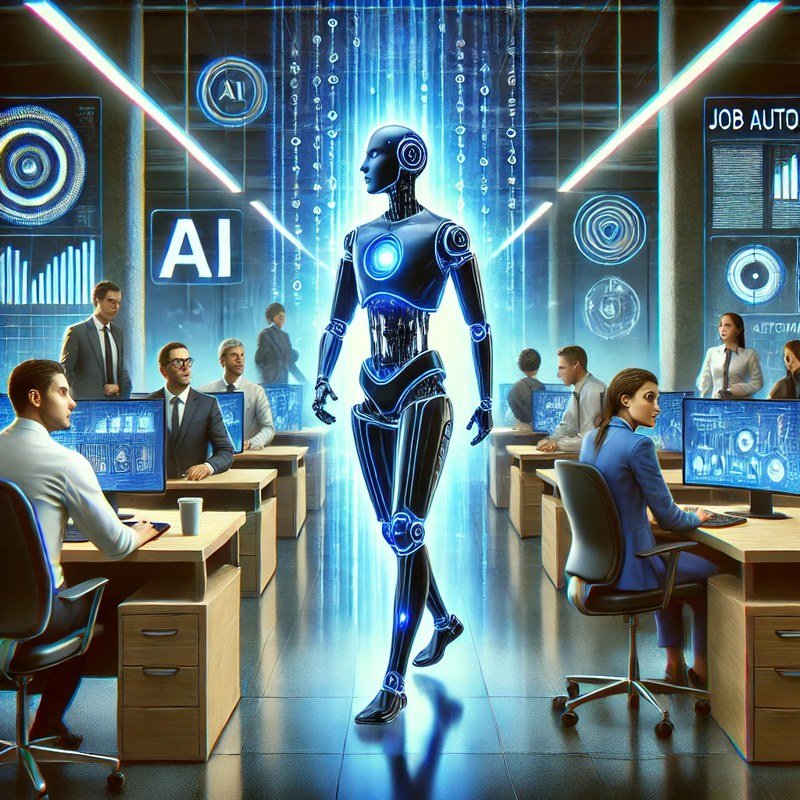
How AI Is Changing Jobs in the Future and What It Means
AI is changing jobs by automating specific tasks rather than entire roles, so most workers will see their daily workflows shift rather than disappear. The key to staying valuable is combining practical AI fluency with judgment, communication, and complex problem-solving skills.
Few workplace topics generate as much genuine anxiety as how ai is changing jobs in the future, and the uncertainty is understandable. Headlines swing between utopian promises of four-day workweeks and grim predictions of mass displacement, leaving workers unsure which version to believe. The reality is more nuanced: AI is not simply replacing jobs or saving them — it is reshaping the tasks inside them, and that distinction matters more than any single headline.
- Task-level change: AI automates repetitive, data-heavy tasks inside jobs, not entire occupations.
- Uneven impact: High-risk roles face displacement, augmented roles gain leverage, and new roles reward AI fluency.
- Resilient skills: Judgment, empathy, communication, and complex problem-solving remain hard for AI to replicate.
- Practical preparation: Audit your tasks, learn one AI tool deeply, and build a weekly learning routine.
How AI Is Changing Jobs in the Future: The Direct Answer
AI is changing jobs by automating specific tasks rather than entire occupations. Most roles are a bundle of responsibilities — some repetitive, some creative, some interpersonal — and AI tends to absorb the predictable, data-heavy parts first. A graphic designer still designs, but AI handles the initial layout variations. A customer service manager still manages people, but AI drafts the routine response emails. The job title survives; the daily workflow does not look the same.
This shift means the future of work is less about “AI vs. humans” and more about “humans who use AI vs. humans who don’t.” Workers who treat AI as a collaborator — reviewing its output, correcting its errors, and guiding its direction — tend to gain leverage. Workers who ignore it risk being measured against colleagues who produce more in the same hours.
That said, the transition is not painless. Some roles with highly repetitive, rules-based work are shrinking, and the speed of change varies dramatically by industry, company size, and geography. The practical question is not whether AI will touch your job, but which parts of it will change first — and what you can do about it now.
The 2026 Job Market: Which Roles Are Most Affected?
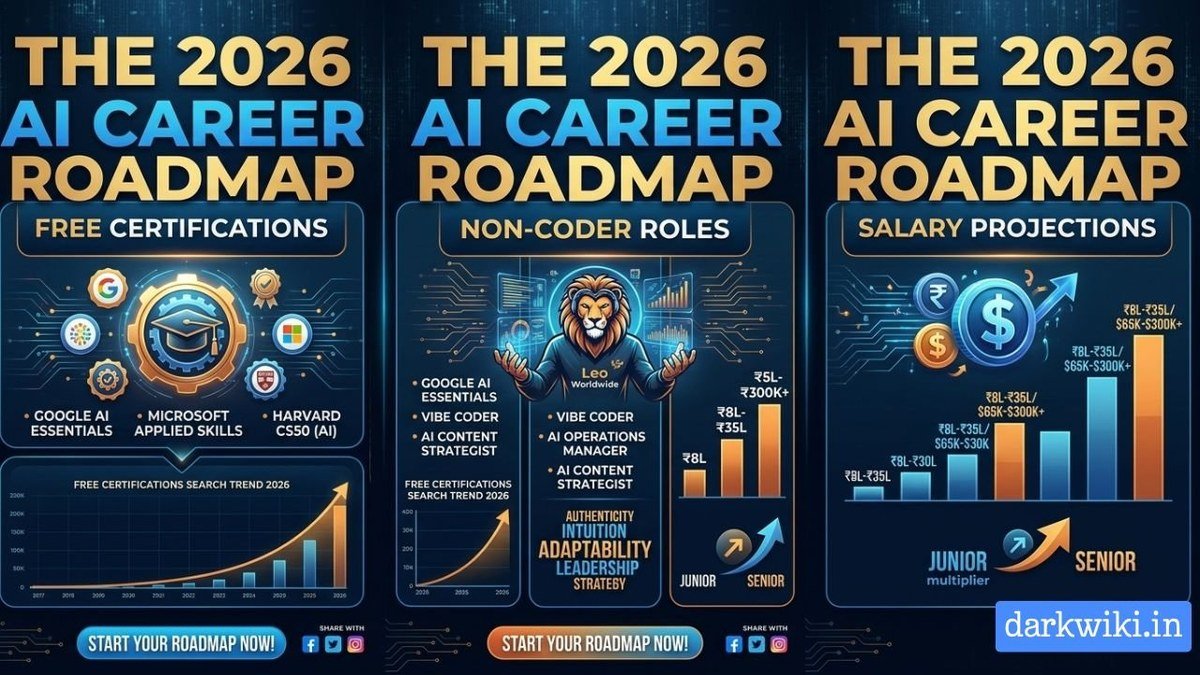
Chart showing which job roles face the most AI impact in 2026.
By 2026, the clearest pattern in the job market is that AI affects roles unevenly. Understanding which category your job falls into helps you plan more strategically than reacting to headlines.
| Role Category | Examples | What AI Changes |
|---|---|---|
| High-risk roles | Data entry, routine transcription, basic bookkeeping, entry-level copywriting | Core repetitive tasks are automated; fewer junior positions act as entry points |
| Augmented roles | Marketing, software development, legal research, nursing, teaching | AI handles drafting, summarization, and pattern-finding; humans oversee quality and judgment |
| New roles | AI prompt engineering, AI ethics, model auditing, workflow automation design | Entirely new functions appear as organizations adopt AI systems |
High-Risk Roles: Automation and Displacement
Roles built around repetitive, rules-based tasks face the most direct pressure. Data entry, basic transcription, routine customer support triage, and entry-level document processing are the clearest examples. These jobs are not vanishing overnight, but the volume of work is shrinking as AI tools handle the same output faster and more cheaply.
The bigger structural concern is the “entry-level squeeze.” Historically, junior roles trained workers for senior ones. If AI absorbs the junior tasks, companies may hire fewer entry-level employees, which could make it harder for early-career workers to build experience. This is less about robots taking jobs and more about the career ladder losing its first few rungs.
Risk levels vary by employer. A small law firm may still hire junior paralegals for document review, while a large firm may automate the same task. Your specific risk depends on your employer’s technology budget and workflow, not just your job title.
Augmented Roles: AI as a Collaborative Tool
The largest group of workers falls into augmented roles — jobs where AI does not replace the professional but changes how they work. Software developers write less boilerplate code and review more AI-generated suggestions. Marketers generate campaign drafts faster and spend more time on strategy and brand voice. Financial analysts get summaries prepared by AI and focus on interpreting anomalies and advising clients.
The key skill in augmented roles is judgment. AI can produce a plausible draft, a reasonable code snippet, or a well-formatted report, but it cannot reliably know when the output is wrong, biased, or inappropriate for the context. The human’s value shifts from production to verification, refinement, and decision-making.
New Roles Created by AI
AI also creates jobs that did not exist a few years ago. Prompt engineering, AI workflow design, model auditing, AI ethics review, and AI training-data curation are growing categories. Most of these roles do not require a computer science degree; they require domain expertise plus the ability to work with AI tools effectively.
For example, a marketing manager who learns to build AI-assisted content workflows becomes more valuable than a generic marketing manager. A legal professional who can design AI review processes for contracts brings a rare combination of skills. The pattern is consistent: the people who thrive are those who combine deep knowledge of their field with practical AI fluency.
What to Look For in an AI-Resilient Career Path
AI resilience is not about finding a “safe” industry — it is about building a mix of skills and work patterns that AI complements rather than replaces.
Transferable Skills That AI Cannot Easily Replicate
Certain human capabilities remain difficult for AI to replicate convincingly. Complex problem-solving across ambiguous situations, genuine empathy in high-stakes conversations, ethical judgment, physical dexterity in unstructured environments, and the ability to build trusted relationships all retain value. These skills are not magic; they are built through practice, feedback, and exposure to real-world complexity.
Communication also matters more than ever. Workers who can translate technical AI output into clear business decisions — and who can explain why a certain result is trustworthy — become the bridge between the technology and the organization. That bridging role is consistently in demand.
Industries With the Strongest Job Growth
Industries where human judgment, physical presence, or regulatory accountability matter most tend to show steadier demand. Healthcare, skilled trades, education, elder care, and roles involving complex stakeholder management continue to need human workers. Technology itself remains a growth area, but the skills required are shifting from routine coding toward system design, AI integration, and security.
That said, no industry is entirely immune. Healthcare administrators face automation in scheduling and billing; teachers use AI to draft lesson plans. The pattern holds: the profession survives, the administrative load shrinks, and the human-facing parts become more central.
The Benefits of AI in the Workplace
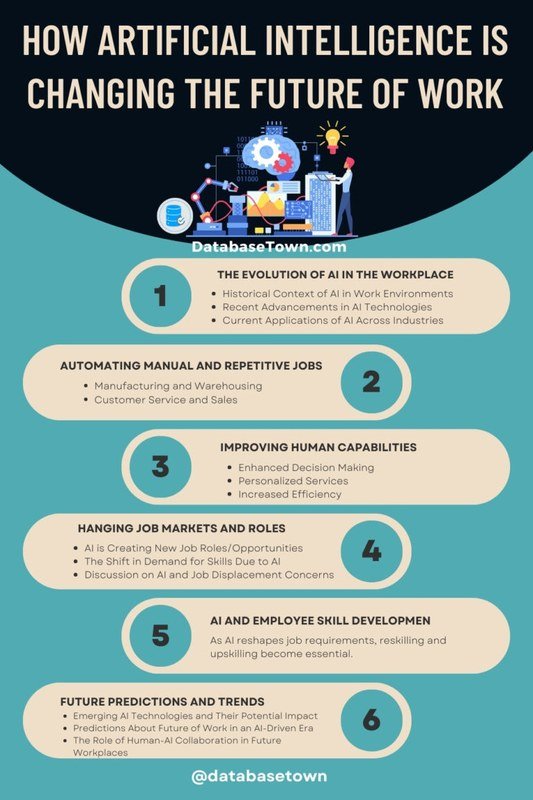
A worker uses AI tools at a desk with data screens in the background.
AI brings measurable advantages that workers often appreciate once they are using it. It removes tedious, repetitive tasks from daily work, freeing time for higher-value activities. It accelerates research and drafting, which can reduce overtime and improve output quality. It also enables smaller teams to produce work that previously required a larger staff, which can create opportunities for skilled individuals to take on more meaningful projects.
- Handles repetitive tasks so you can focus on judgment-heavy work
- Speeds up drafting, research, and data analysis
- Creates new roles for workers who combine domain expertise with AI fluency
- Can produce confident but incorrect output that requires careful review
- May reduce entry-level hiring in some fields
- Requires continuous learning to stay current with new tools
For workers willing to adapt, the practical benefit is leverage: the same effort produces more output, which can translate into faster career growth, more responsibility, or better work-life balance. The catch is that the leverage only helps if you invest the time to learn the tools properly.
The Limitations and Risks of AI-Driven Employment
AI’s limitations are just as important as its benefits, and workers who understand them make better decisions. AI models can hallucinate — generating plausible-sounding but false information — which means they cannot be trusted for high-stakes decisions without verification. They also reflect the biases present in their training data, which can create fairness problems in hiring, lending, and other sensitive areas.
There are also structural risks. Companies may adopt AI tools faster than they update training programs, leaving employees to figure things out on their own. Job descriptions may shift without clear guidance on what is expected. And in some fields, the pace of change can make skills obsolete quickly, creating pressure to learn continuously.
Finally, there is the human cost of poorly managed transitions. When AI is introduced without clear communication, workers may feel anxious, resentful, or uncertain about their roles. Employers who invest in training and transparent change management tend to see better outcomes — but not all employers do.
Common Mistakes Workers Make When Preparing for AI
Many workers respond to AI anxiety in ways that actually weaken their position. The most common mistakes are worth naming so you can avoid them.
- Learn the AI tools used in your industry and practice with them weekly
- Focus on the judgment, ethics, and relationship skills AI cannot replace
- Track how your role’s tasks are changing and adapt proactively
- Assuming your job is “too creative” or “too complex” to be affected
- Chasing every new AI trend without connecting it to your actual work
- Ignoring AI entirely in the hope that it will go away
Another common mistake is focusing only on technical skills. Learning to use AI tools is necessary, but it is not sufficient. The workers who remain most valuable are those who combine tool fluency with deep domain knowledge, strong communication, and the ability to make sound decisions under uncertainty.
How to Future-Proof Your Career: A Practical Framework
Future-proofing does not require a dramatic career change. It requires a consistent, practical approach to learning and positioning.
List the top ten tasks in your job. Mark which ones are repetitive, data-heavy, or rules-based — those are the most likely to be automated. The remaining tasks are where you should invest your energy.
Choose the tool most relevant to your field and use it on real work for a month. Focus on understanding its strengths, weaknesses, and how to review its output critically.
Seek work that involves ambiguous problems, ethical decisions, and stakeholder communication. These are the areas where human value is highest and AI assistance is weakest.
Set aside a small amount of time each week to follow AI developments in your industry. You do not need to master everything — just stay aware of what is changing.
Final Recommendation: What This Means for You
The honest answer is that AI will change most jobs to some degree, but the outcome depends more on your response than on the technology itself. Workers who treat AI as a tool to learn, who invest in judgment and communication skills, and who stay aware of changes in their field are well positioned. Workers who ignore the shift or assume their role is immune face the greatest risk.
Start with a simple task audit this week. Identify the repetitive parts of your job, learn how AI handles them, and redirect your energy toward the human skills that matter most. You do not need to become an AI expert overnight — you need to become a worker who uses AI deliberately rather than being surprised by it.
- AI automates tasks, not entire jobs — but it reshapes the daily workflow of most roles.
- High-risk roles are repetitive and rules-based; augmented roles gain leverage; new roles reward AI fluency plus domain expertise.
- Judgment, communication, empathy, and complex problem-solving remain the most AI-resilient skills.
- Future-proofing means auditing your tasks, learning one AI tool deeply, and building a sustainable learning routine.
Frequently Asked Questions