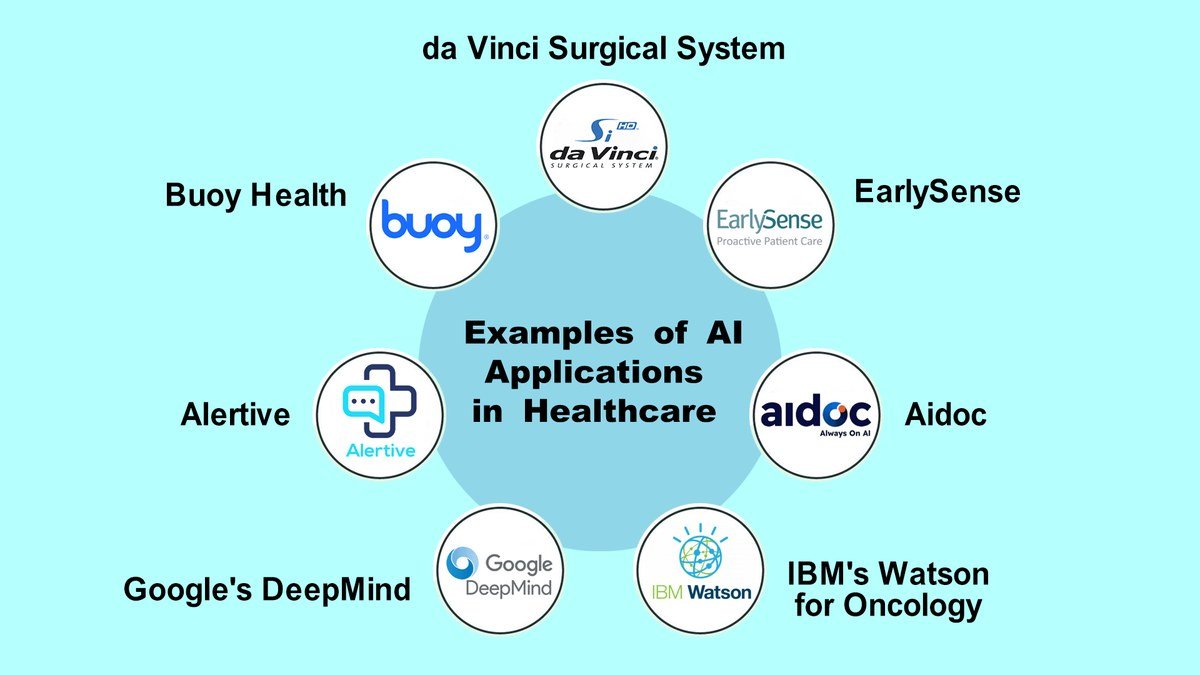
How AI is Used in Healthcare Examples You Need to Know
AI in healthcare is used for medical imaging, drug discovery, personalized treatment planning, surgical assistance, mental health support, and administrative automation. It works best as decision support for clinicians, not as a replacement for human judgment.
How AI is used in healthcare examples spans far beyond chatbots and futuristic robots—it now touches everyday tasks like reading mammograms, flagging early signs of sepsis, and drafting clinical notes. This guide explains the real applications by specialty, what the evidence shows, and where AI still needs a cautious human hand.
- Imaging leads: AI triage and detection in radiology is the most mature and widely deployed use.
- Drug discovery: AI accelerates target and molecule identification, but most AI-generated drugs are still in early.
- Admin wins: Ambient documentation and billing automation deliver the clearest near-term time savings.
- Limits matter: Bias, alert fatigue, and retrospective evidence mean AI needs human oversight.
- Verify claims: Look for regulatory clearance, clinical validation, and bias testing before trusting any tool.
How AI Is Used in Healthcare: Examples That Answer the Question
AI in healthcare is not a single product. It is a set of technologies applied to different problems: machine learning models that find patterns in medical images, natural language processing that reads clinical notes, predictive algorithms that estimate patient risk, and generative AI that drafts documents or talks with patients.
Most tools fall into one of four categories:
| Category | What It Does | Example Setting |
|---|---|---|
| Imaging AI | Detects or measures findings in scans and slides | Radiology, pathology, dermatology |
| Predictive AI | Estimates risk of events like sepsis or readmission | ICU, hospital wards |
| Generative AI | Drafts notes, answers patient messages, summarizes records | Clinics, telehealth |
| Assistive AI | Guides procedures and matches treatments to patients | Surgery, oncology, pharmacy |
Understanding these categories helps you evaluate any claim about AI. The most important question is not “is it smart?” but “does it improve a specific clinical task without adding risk?”
Real-World Examples of AI in Healthcare by Specialty
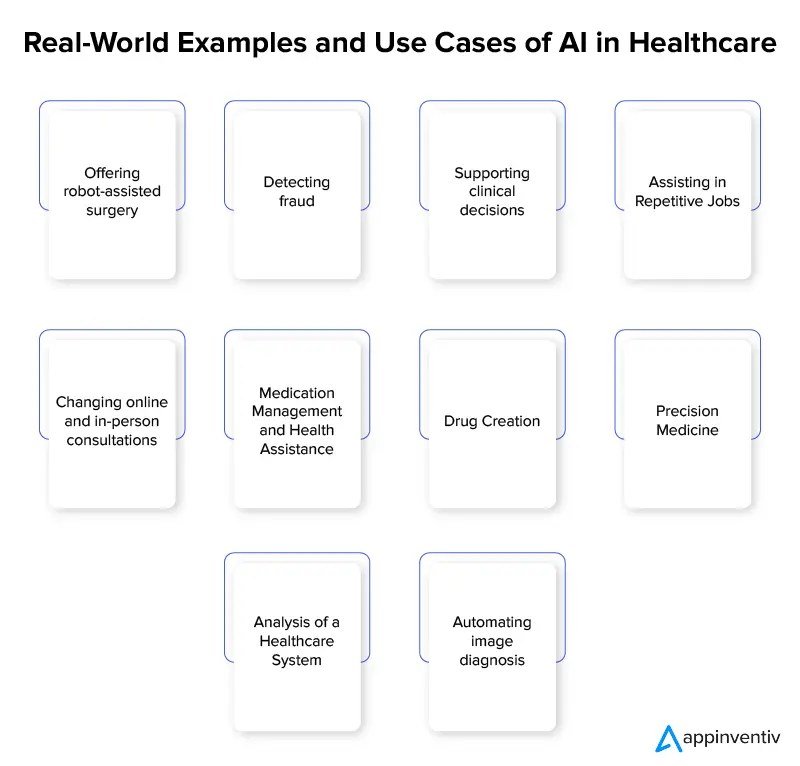
Examples of AI tools used across medical specialties, from imaging analysis to predictive diagnostics.
Here is where AI actually shows up in patient care, organized by specialty.
AI in Medical Imaging and Diagnostics
Radiology is the most mature area of healthcare AI. Algorithms trained on large sets of CT, MRI, and X-ray images can highlight suspicious findings, measure structures, and prioritize urgent cases in the work queue.
Well-known examples include AI that flags suspicious lesions on mammograms, software that detects diabetic retinopathy from retinal photographs without a specialist present, and chest X-ray tools that identify pneumothorax or fluid buildup. One of the first fully autonomous AI diagnostic systems cleared by the U.S. FDA was designed for diabetic retinopathy screening, meaning it could provide a result without a specialist reading the image in real time.
In most hospitals, imaging AI works as a second reader. It flags findings and prioritizes scans, but a radiologist makes the final call. Accuracy varies by image quality, patient population, and the specific condition being screened.
AI in Drug Discovery and Clinical Trials
Drug development is slow and expensive, and AI is used to compress several steps. Models predict the three-dimensional structure of proteins, screen millions of chemical compounds for promising candidates, and forecast which drug molecules are likely to be toxic or ineffective before they reach the lab.
A widely publicized example is AlphaFold, which predicted protein structures that took researchers years to determine experimentally. In another example, an AI-discovered drug candidate for idiopathic pulmonary fibrosis advanced into human trials—a milestone that showed AI-generated molecules can move beyond the computer.
AI also helps with clinical trials: matching patients to studies they qualify for, monitoring participants for adverse events, and analyzing trial data faster than traditional methods.
AI in Personalized Medicine and Treatment Planning
Personalized medicine uses patient data to choose the right treatment at the right dose. AI models combine genetic information, lab results, and medical history to predict how a patient will respond to a drug or which therapy is likely to work best.
In oncology, AI helps map tumors and plan radiation therapy by contouring organs at risk. In pharmacogenomics, algorithms flag patients who may metabolize a drug too quickly or too slowly based on their genetic profile. In hospital wards, predictive models use vital signs and lab trends to warn of conditions like sepsis hours before obvious symptoms appear.
AI in Robotic Surgery and Procedure Assistance
It is important to be precise: AI does not perform surgery on its own. Surgical robots like the da Vinci system are controlled by a surgeon, and AI contributes by enhancing vision, filtering hand tremor, and helping the surgeon identify critical structures.
In endoscopy and colonoscopy, AI tools highlight polyps in real time so the physician does not miss them. In neurosurgery, AI-assisted navigation helps plan the safest path to a tumor. The value of these tools is consistency and precision, not autonomy. Autonomous robotic surgery is not a current standard of care, and any claim that a robot “operates by itself” should be treated with skepticism.
AI in Mental Health and Virtual Nursing
Mental health chatbots deliver cognitive behavioral therapy exercises through text conversations. Apps like Woebot and Wysa are designed for mild anxiety and stress support, not for crisis intervention. Virtual nursing tools check in with patients after discharge, remind them to take medications, and answer common questions so nurses can focus on complex cases.
AI chatbots are not a substitute for a human therapist, and they are not crisis services. If you or someone you know is in immediate danger, contact emergency services or a local crisis line instead of relying on an app.
How AI Improves Diagnostics: Specific Examples in Imaging and Screening
Diagnostic AI adds value in four ways: triage, detection, quantification, and reporting. Triage tools read incoming scans and flag the most urgent ones—such as a suspected stroke or a collapsed lung—so they move to the top of the radiologist’s list. Detection tools highlight areas a human eye might miss. Quantification tools measure tumor size or disease progression consistently across scans. Reporting tools draft structured findings that save time.
In dermatology, AI apps analyze photos of skin lesions and give a risk score, though they are not a replacement for a biopsy. In pathology, AI scans digital slides and flags suspicious cells for a pathologist to review. In stroke care, AI can help estimate the size of the affected brain region from a CT scan, supporting faster treatment decisions.
The evidence for these tools is strongest when they are tested on the same type of patients and equipment used in real practice. A model trained on one hospital’s scanners may perform worse on another’s images, so local validation matters.
AI in Drug Discovery and Clinical Trials: Examples and Measured Impact
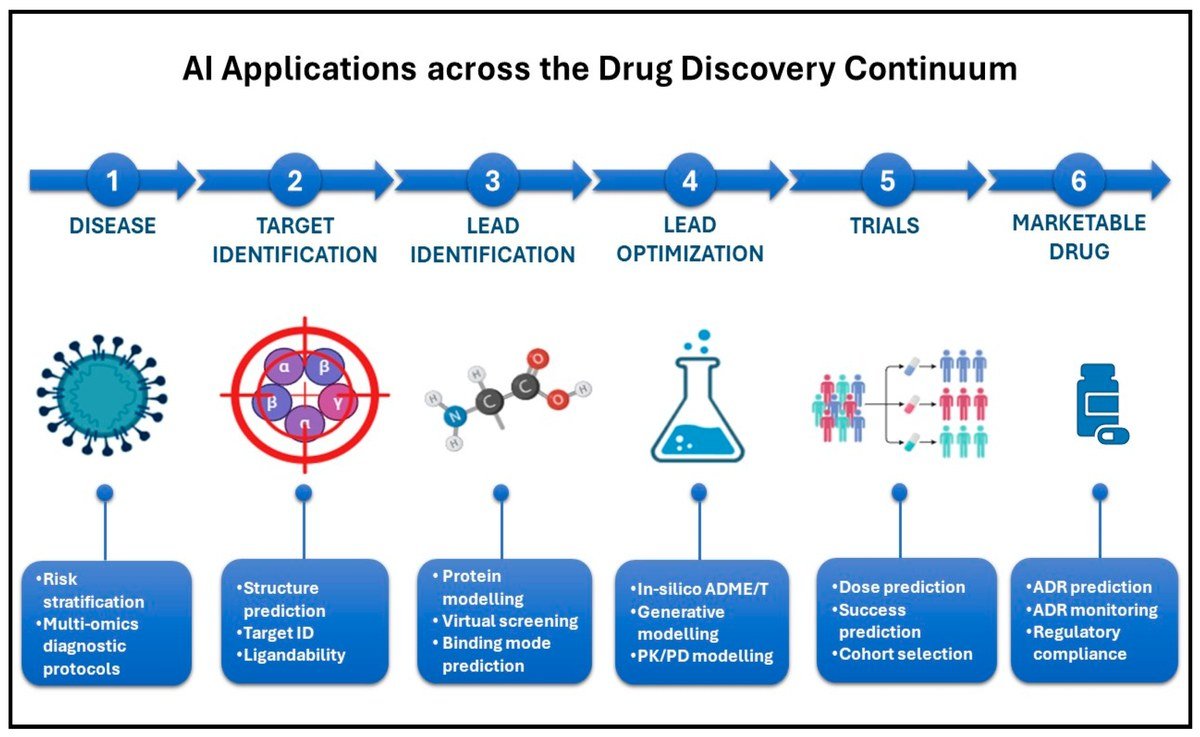
AI-powered software maps molecular structures to accelerate drug discovery and clinical trials.
The drug pipeline has several stages, and AI touches each one differently.
| Pipeline Stage | Traditional Approach | AI-Assisted Approach |
|---|---|---|
| Target identification | Years of lab experiments | Models analyze genetic and protein data to rank targets |
| Molecule design | Chemists synthesize limited candidates | Generative models propose thousands of novel molecules |
| Toxicity prediction | Late-stage failures are costly | Models flag risky compounds earlier |
| Patient recruitment | Manual chart review | Algorithms match patients to trials automatically |
| Trial monitoring | Periodic manual checks | Continuous analysis flags safety signals faster |
The measured impact is real but still early. AI has shortened the time needed to identify lead compounds in some programs, and AI-generated molecules have entered human trials. However, most AI-discovered drugs are still in early-phase testing, and the overall success rate of drug development remains low. Treat dramatic claims about “AI-cured diseases” with caution.
AI for Administrative Workflows: Virtual Assistants and Automation Examples
Administrative burden is one of the biggest complaints in healthcare, and it is where AI delivers the most obvious near-term value. Ambient documentation tools listen to a clinician’s conversation with a patient and automatically draft the visit note. The clinician reviews and signs it instead of typing for hours after the visit.
Other examples include AI that converts dictated notes into billing codes, chatbots that answer patient questions about appointments and test results, and systems that predict no-shows to optimize scheduling. Prior authorization—the process of getting insurance approval for treatments—is another target, with AI drafting the required documentation and flagging missing information.
Benefits and Value of AI in Healthcare: What to Look For
The benefits of healthcare AI are real but uneven. In imaging, AI can reduce the time between scan and treatment by prioritizing urgent cases. In documentation, it can give clinicians hours back each week. In drug discovery, it can explore chemical space far faster than manual methods. And because AI does not get tired, it can maintain consistent performance on repetitive tasks like measuring nodules or reviewing normal scans.
When evaluating any healthcare AI claim, look for three things. First, clinical validation: was the tool tested on a population similar to yours, and were the results published or reviewed? Second, regulatory status: is it cleared or approved by a regulator like the FDA, and for what specific use? Third, workflow fit: does it integrate with the electronic health record and the clinician’s existing routine, or does it create extra clicks and alerts?
Also ask about bias. If the training data came mostly from one demographic group, the tool may perform worse on other groups. Good vendors report performance across age, sex, and ethnicity.
Limitations, Common Mistakes, and Evidence Gaps in Healthcare AI
AI in healthcare fails in predictable ways. The most common mistake is treating a decision-support tool as if it were a diagnosis machine. A model that flags a suspicious lung nodule is not diagnosing cancer; it is prompting a human to look more carefully. When that distinction is lost, patients can be harmed by both false reassurance and unnecessary panic.
Evidence gaps are another issue. Many published AI studies are retrospective—they test the model on old data rather than in real-time clinical use. Performance often drops when a model meets new equipment, new patient populations, or messy real-world data. Alert fatigue is also real: when a system flags too many findings, clinicians start ignoring them.
Drawbacks, Risks, and Non-AI Alternatives
The drawbacks include cost, training burden, and maintenance. AI tools need continuous monitoring because patient populations and clinical practices change. Privacy is a concern when patient data is shared with vendors, so data-use agreements and security reviews matter.
There are also equity risks. If a model is trained mostly on data from well-resourced hospitals, it may underperform in rural or underfunded settings. Over-reliance on AI can also erode clinical skills—if a junior doctor always trusts the algorithm, they may not develop the pattern recognition they need.
Non-AI alternatives still work well. Traditional double-reading of mammograms, standardized screening protocols, human second opinions, and careful manual documentation all remain valid. A well-run manual process often beats a poorly deployed AI tool. The right question is not “AI or no AI” but “does this specific tool improve this specific workflow for these specific patients?”
Final Recommendation: Where Healthcare AI Delivers Value in 2026
In 2026, the strongest value is in three areas: imaging triage and detection, administrative automation, and early-stage drug discovery. These applications have the clearest evidence, the most regulatory clarity, and the fewest safety risks. The weakest evidence is in fully autonomous diagnosis and unguided mental health chatbots—both need human oversight and should be treated as support tools, not replacements.
- Imaging AI is the most mature use—triage, detection, and measurement with a radiologist in the loop.
- Drug discovery AI accelerates early research, but most AI-generated drugs are still in early trials.
- Administrative AI delivers the clearest near-term time savings in documentation, coding, and scheduling.
- Always verify clinical validation, regulatory clearance, and bias testing before trusting any healthcare AI claim.
Frequently Asked Questions




One Comment